Fair Observer
The Bigger Problem within Oxfam’s Sex Scandal
By Shelley Briggs Callahan
Who is monitoring the charities that the public perceives as moral leaders?
Oxfam, one of the UK’s largest and best known charities, is currently entangled in a scandal following revelations that senior staff members engaged in sexual misconduct during the 2010 Haiti earthquake recovery effort and had hired prostitutes while working in Chad in 2006. The report revealed that aid workers held sex parties, turning a villa rented by Oxfam into a makeshift brothel, with senior officers allegedly attempting to cover up the behavior.
Roland van Hauwermeiren, the man at the heart of the scandal, was head of operations in both Chad and then Haiti, resigning from that last position in 2011 following an internal investigation by Oxfam. Since the story broke, four staff members have been fired, and three others have resigned, including Oxfam’s deputy chief executive, Penny Lawrence, who was the organization’s program director at the time of the Haiti earthquake.
While alarming that Oxfam, or any NGO for that matter, would cover up such distressing acts, what is of equal concern is that van Hauwermeiren, who admitted to the claims of his involvement in the Haiti scandal while disputing the exact allegations against him, had, in 2004, left his position with the Merlin charity in Liberia amid reports of using prostitutes. The question of why he was allowed to pursue another job working with vulnerable populations is confounding: How did an aid worker whose career objective is to provide support for people living in poverty get the opportunity to exploit them on more than one occasion? The answer lies within the broken system of the global aid industry and leads to questions of who is monitoring the charities that the public tends to perceive as moral leaders.
How One Couple Brought Health Care to Haiti
By Shelley Briggs Callahan
Amidst a doctors’ strike and a hurricane in Haiti, a story of one couple’s determination to bring health care to the island.
In May 2016, when I heard the news of the doctors’ strike taking place in Haiti, my heart sank. Doctors, nurses and medical residents had been on strike since March as they protested low wages and demanded better working conditions, leading to the shutdown of Haiti’s largest hospitals. And now, as the news of the devastation caused by Hurricane Matthew floods in from Haiti, ever more families need access to health care and medicine as quickly as possible.
Since the strike began, hospitals have essentially closed, and Haitians in need of medical care have been left to compete to get into NGO-run hospitals whose facilities are overwhelmed, with no room for patients or enough resources to treat the abundance of injured and ill that fill the waiting rooms.
After spending the last six years working at a medical clinic near Jacmel, in Haiti’s Sud-Est Department, I knew firsthand just how desperately Haitians needed a reliable health care system and how devastating a strike of such magnitude must have been affecting the country.
Witness to Hardship
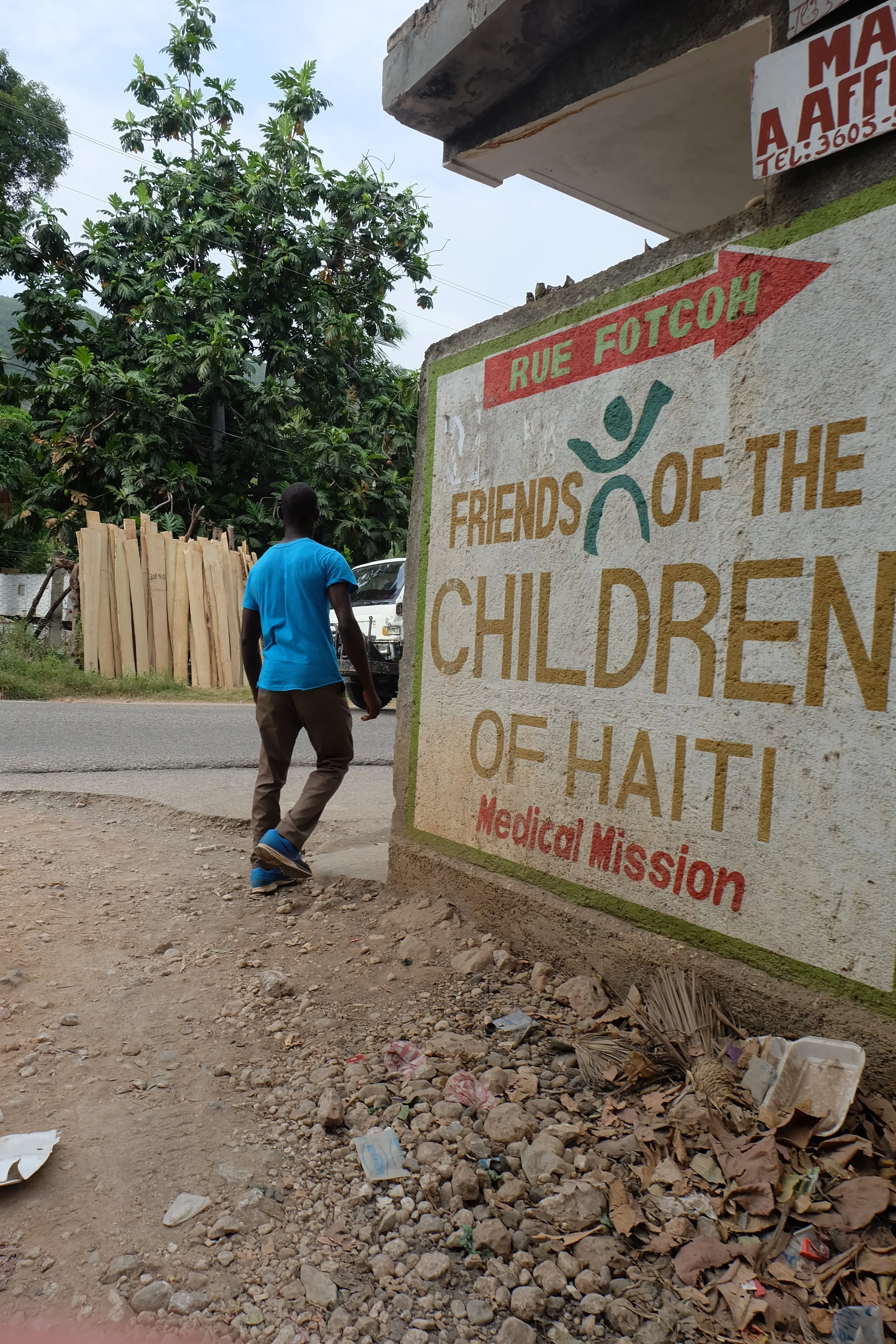
For a long time, I have been aware of how important the Friends of the Children of Haiti clinic (more commonly referred to as the FOTCOH clinic) is to Haitians. It was built in 2000, after its founders, Dick and Barb Hammond, had been bringing doctors and nurses to Haiti to create pop-up clinics to treat patients in incredibly remote areas of the country for nearly 15 years.
Since its completion, every year nearly 15,000 Haitian patients travel to the clinic to receive free medical care from visiting volunteer medical teams. FOTCOH provides much needed medical, dental, surgical and nutritional support for the poorest Haitians who would otherwise go without being treated, having no other means to afford to see a doctor. In the Sud-Est Department, there is only one main hospital, the St. Michel Hospital, and the cost to a patient exceeds the opportunity to meet with a doctor by a long margin. Patients are also expected to pay for medications before receiving them, as well as pay for their own food if it is required that they stay in the hospital overnight.
In 2016 and 2018, I had the honor of writing two online articles for the Fair Observer based on current events that were happening at the time in Haiti.