Reverend Larry and the apple king
It was a car accident that led to me starting a nonprofit with my friend Ward. I was driving my pickup truck home late one night from work when a young college student ran a stop sign right in front of me. I t-boned his car going less than 30 miles an hour - not fast, but I still hit him hard enough to make a damaging impact. Luckily, I hit the car right behind the driver’s seat, where no one was sitting, saving the other driver from being injured. I was in shock, but unhurt. My truck was not as fortunate. It was destroyed and had to be towed away. Stranded without a ride, I once again called Ward to come to rescue me. He was such a reliable, good friend who would do anything for me. Even though it was much after midnight, he came and picked me up and took me home.
Ward and I had become friends before I started graduate school. Anna introduced us, and we hit it off right away. Ward had a contagious energy about him. He was funny, and he was so optimistic and genuinely interested in anyone he was talking to. He was the kind of person you could tell anything to and feel comfortable and safe that you shared something with him. Even more so, he was a business owner, a good one at that, and he frequently held community events and fundraisers at his bookstore, Chop Suey, always willing to work with people to help a cause. He was the busiest person I knew, but still managed to make time for his friends, which I admired.
I loved that truck, but it hadn’t been worth much in the first place. When I settled with the insurance company for a small sum, I didn’t know right away what I wanted to do, but I thought I would start by looking in the Auto Trader for something similar. I went to a convenience store the next day to pick up a copy and brought it home. After thumbing through the magazine for a minute, I came across an ad that said, “Fun Color!” accompanied by a black-and-white photo of a small bus. I had never thought about purchasing a bus before, but suddenly, I felt like the only thing that made sense. Why wouldn’t I buy a bus? It actually made a lot of sense. In my pick-up truck, I spent my free time picking up and hauling around bikes, but in a bus, I could keep them safe and locked, and even store parts and tools. And better yet, I thought, as I circled the ad with a black Sharpie marker, what if instead of just working on bikes at my sister’s warehouse, I drove the bus around and fixed bikes in neighborhoods around town? That way, I could reach people who weren’t able to come to my sister’s bike shop to get their bikes fixed. Best of all, I could do it for free, so people didn’t have to worry about having extra income, especially if they really needed their bike for transportation, or for kids who wanted to get out of the house in the summer and have fun. I set the magazine down, not feeling a need to through it anymore—I would call the number in the ad just as soon as the weekend was over.
The next day, Ward came over to my house. He looked down at the Auto Trader sitting out on my coffee table, the page opened to the fun-colored bus, the ad circled. He picked up the magazine and asked if I was thinking about buying this bus. I told him my idea about fixing bikes around town and doing it for free. He admitted he had always wanted to have a book mobile because he had tons of books at Chop Suey that were in perfectly fine condition but that he couldn’t sell—mass-printed books that were not in high demand or weren’t worth him having on the shelves, or children’s books that he just didn’t have room for.
I couldn’t believe it. It was perfect. The idea I had come up with only yesterday perfectly fit with what Ward had wanted to do for a long time. He was not only telling me that he thought I had a good idea, but he was telling me he wanted to work with me on it. I was elated and overwhelmed with the possibilities of what we could do together. Right there in my living room, we decided we would purchase the bus together if it was in good enough of condition to be worth it.
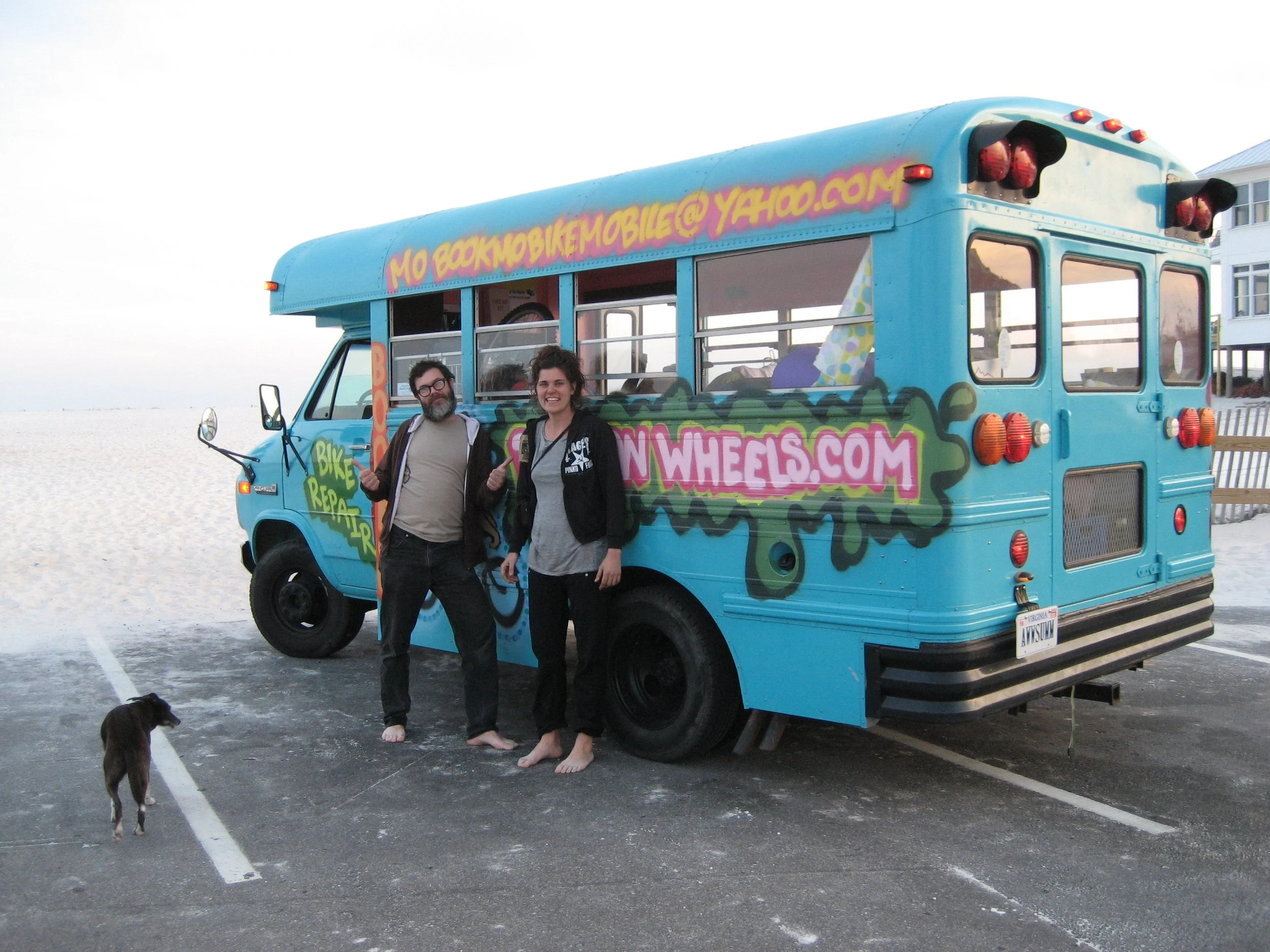
Ward called the owner the next day. His name was Buzz, and he ran a water rafting business in Richmond that took rafters and kayakers down the James River. He agreed to meet us a few days later. We arranged to meet him in the parking lot of a local grocery store so we could test drive the bus while we spoke with him about it. As we approached the parking lot, I could see Buzz’s bus from half a mile down the road. The ad was right. The bus was a fun color. It was bright blue, the paint job shining brightly even though it was a dull, grey winter day. I started to clap my hands like a child and bounced in my seat when we pulled up next to the bus, Buzz waiting in the driver’s seat with the bus door open. I loved it after only having seen it for a few seconds, and I knew I wanted it. Thankfully, Ward was with me, because if I was alone, there was a good chance I would have forgotten to ask any sensible questions about the engine or how the bus ran.
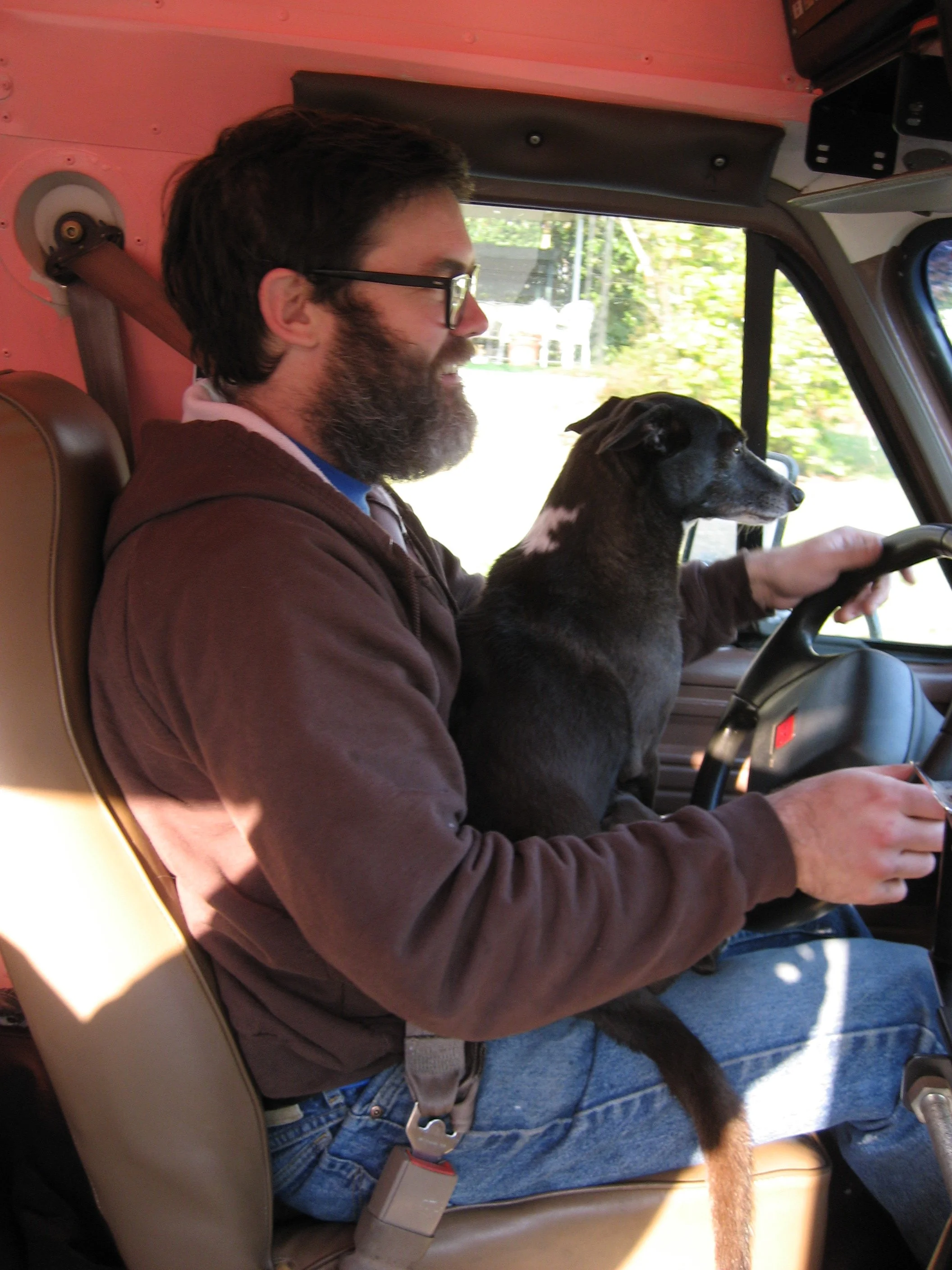
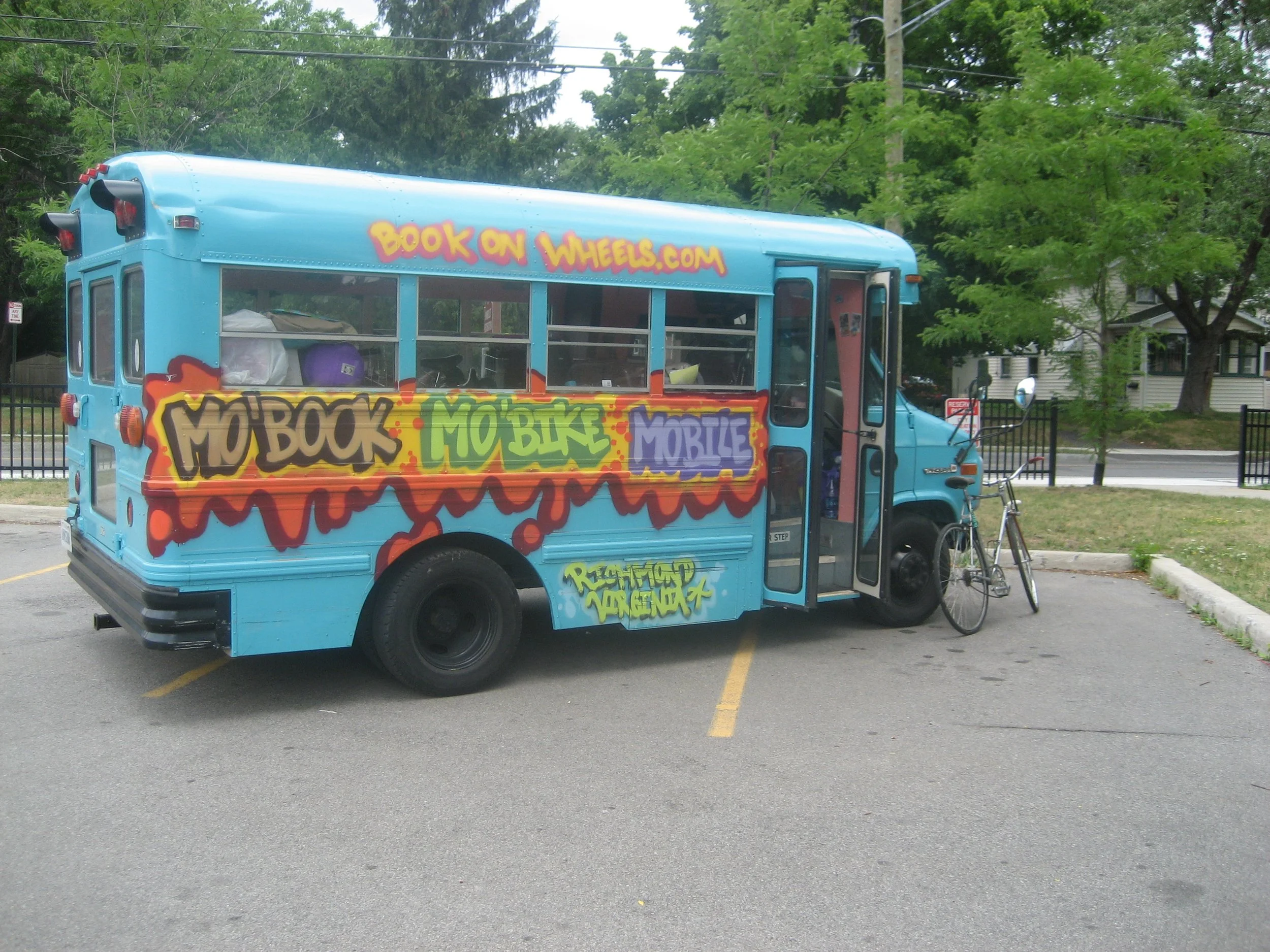
We greeted Buzz, a small, stout, friendly man in his mid-40s. He showed us inside the bus, which was in pristine condition—clean, with three rows of seats, no tears in the vinyl, the rubber strip running down the middle of the floor free of rips. Ward and I practiced opening the bus door, pulling the lever towards us, turning on all the lights, and pushing every button we could find. We took turns driving the bus around the parking lot, and since it was small, not much larger than a large van, both Ward and I felt comfortable behind the driver’s seat. Buzz explained that he was only selling his bus because he was downsizing his rafting business. He told us it had run great, and he didn’t think we would have any problems with it. We agreed right then and there to take it off his hands. I drove Buzz to his house and dropped him off, wrote him a check, and took our new blue bus home, proudly parking it right out in front of my house.
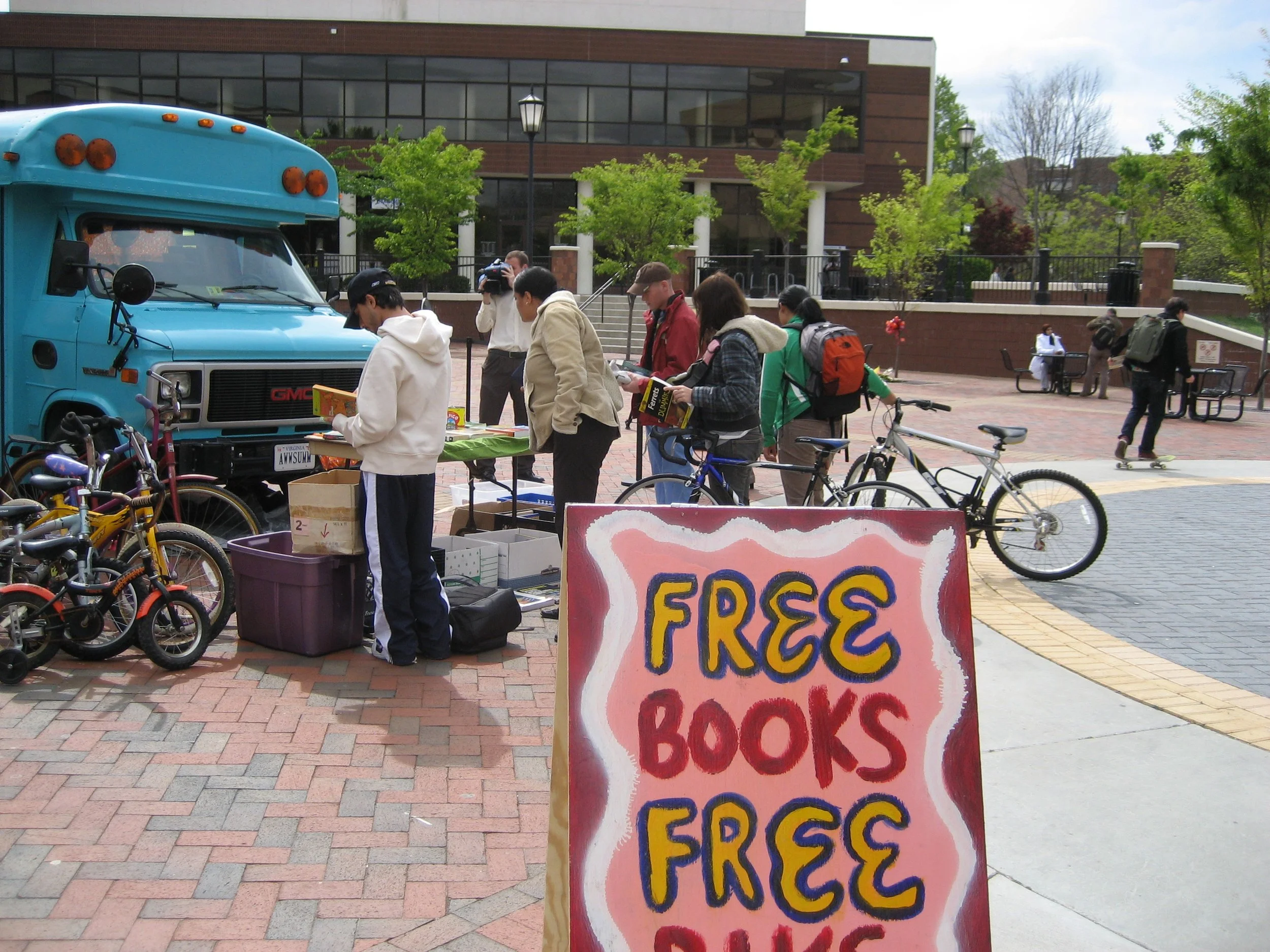
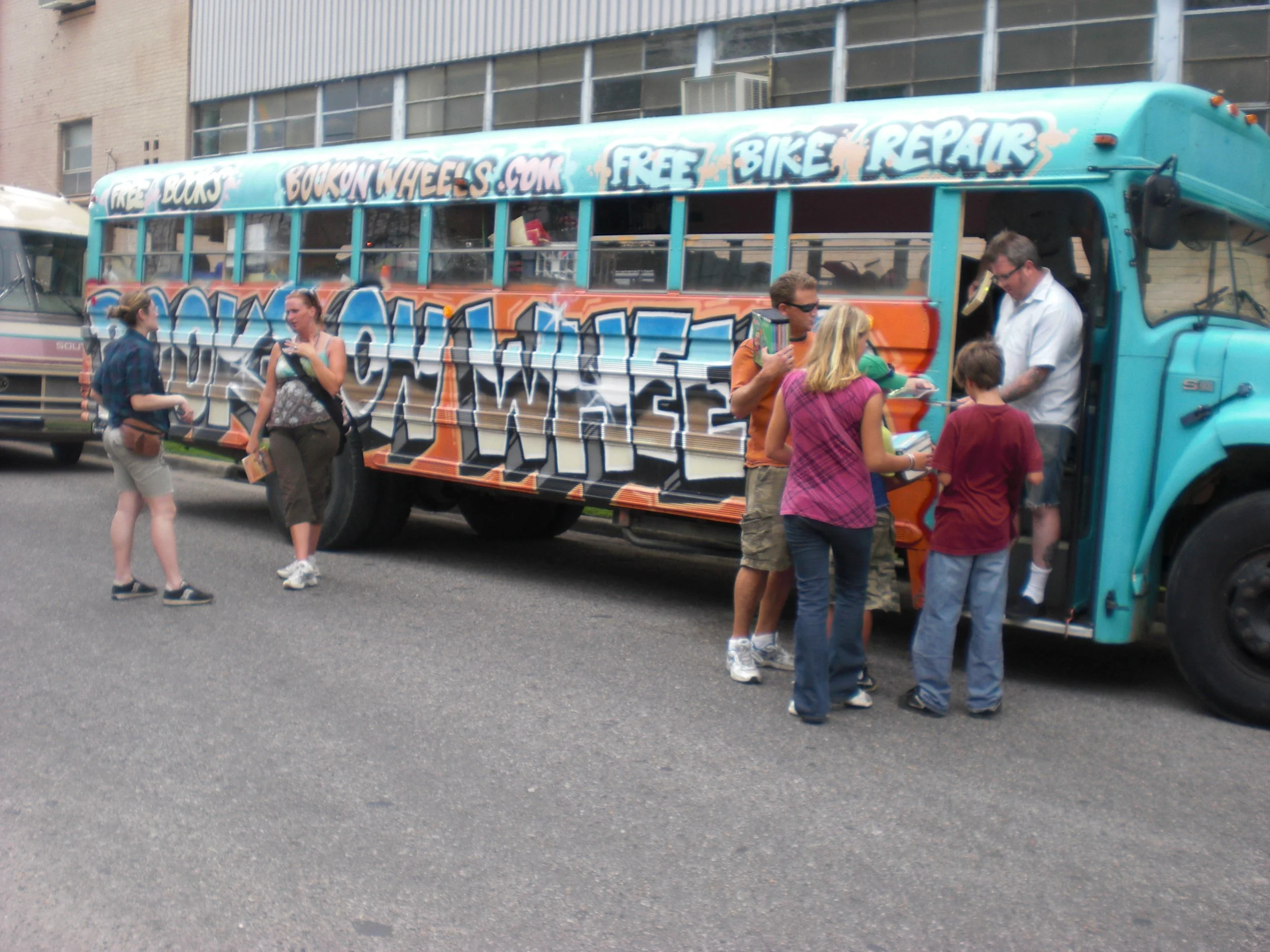
The following weekend, Ward and I got started converting the bus into an actual book and bike mobile, or the MoBookMobikeMobile. We used an angle grinder to cut out all but one of the benches and painted the interior bright pink. We built a loft that could be used for sleeping on top of and for storing spare bike parts beneath, and we hired a friend to paint the name of our new organization across the bus: Books on Wheels. We stocked the bus with boxes of books, along with spare tires, tubes, wheels, and bike tools.
Almost just as quickly, I filed paperwork to become an official nonprofit organization, and Ward and I started planning events around the city. The only problem was that it was late February, and much too cold in Richmond to set up outside to work on bikes and give away books. We knew no one would come out, even for free stuff, when the temperature was freezing. My spring break was coming up at school, and we figured the best way to start operating as soon as possible was to leave town and head somewhere warmer.
Within just a few weeks, Ward and I had scheduled our first tour. In late March, we would head out of Richmond going south. We set up our tours like any band would—we called our friends, told them we wanted to come into town, and asked if they knew a place we could set up, like outside a library, or community center, or in a restaurant parking lot—almost anything would work as long as people could see us and access the bus easily.
Since I only had a week off from school for break, our schedule would include just three cities—Greensboro, Pensacola, and New Orleans—where we knew people already. Ward had a friend in Greensboro, we had a mutual friend in Pensacola, and I had a connection in New Orleans from the time I lived there only a few years before. When I got in touch with one of my old roommates, he suggested I talk to one of the organizers of the free library in the warehouse where we had lived together. Once I did, she put me in touch with a pastor in town named Reverend Larry. It was the first time I would tell someone about Ward’s and my idea who was a stranger. I felt nervous as I dialed the number she had given me for the Reverend. I was afraid he would laugh at my offer to give away free books and free bike repair to their community. But Reverend Larry said he loved the idea. He invited us to set up at his church while we were in town.
I’d left New Orleans the spring before Hurricane Katrina hit the city, and I hadn’t been back since. It had been two years, and I knew that my former roommates had all moved back into the warehouse. Luckily, it hadn’t been too terribly damaged—at least not so much that they couldn’t repair it. Many of the neighbors who rented small, rundown apartments had left, seeking refuge in Baton Rouge or Dallas, and they didn’t have the means to return after the hurricane to even find out if any of their personal belongings remained. Since storms aren’t something that typically makes people say goodbye to one another, as though they won’t see each other again, many people didn’t, not considering that they wouldn’t return to their home. One of our neighbors, a young black man named Renee, whom I spent time drinking beers in lawn chairs outside of the warehouse in the street, was one of those people. Sometimes I would take him to scrap yards to exchange old AC units he had found on the side of the road for a few bucks in pocket change, and then we would sit around talking, enjoying the nice weather. I learned during our visit to New Orleans that he never came back, and no one knows where exactly he had gone before the hurricane hit.
Before we left Richmond, Ward and I held a fundraiser at a local bar. The next morning, we left, not knowing what to expect, but full of excitement for our adventure. In Greensboro and Pensacola, most of the people we met had been told about us by our friends who booked us. We were welcomed warmly, and everyone who stopped by our bus was friendly, but they were hesitant to take books or ask for repairs. They felt other people needed them more than they did. We understood the awkwardness of taking something for free, but tried to explain it wasn’t about whether you could afford it or not—it was about the idea of taking away barriers to access to literature. Still, we didn’t give away much, and repaired even fewer bikes. By the time we got to New Orleans, however, all of that changed.
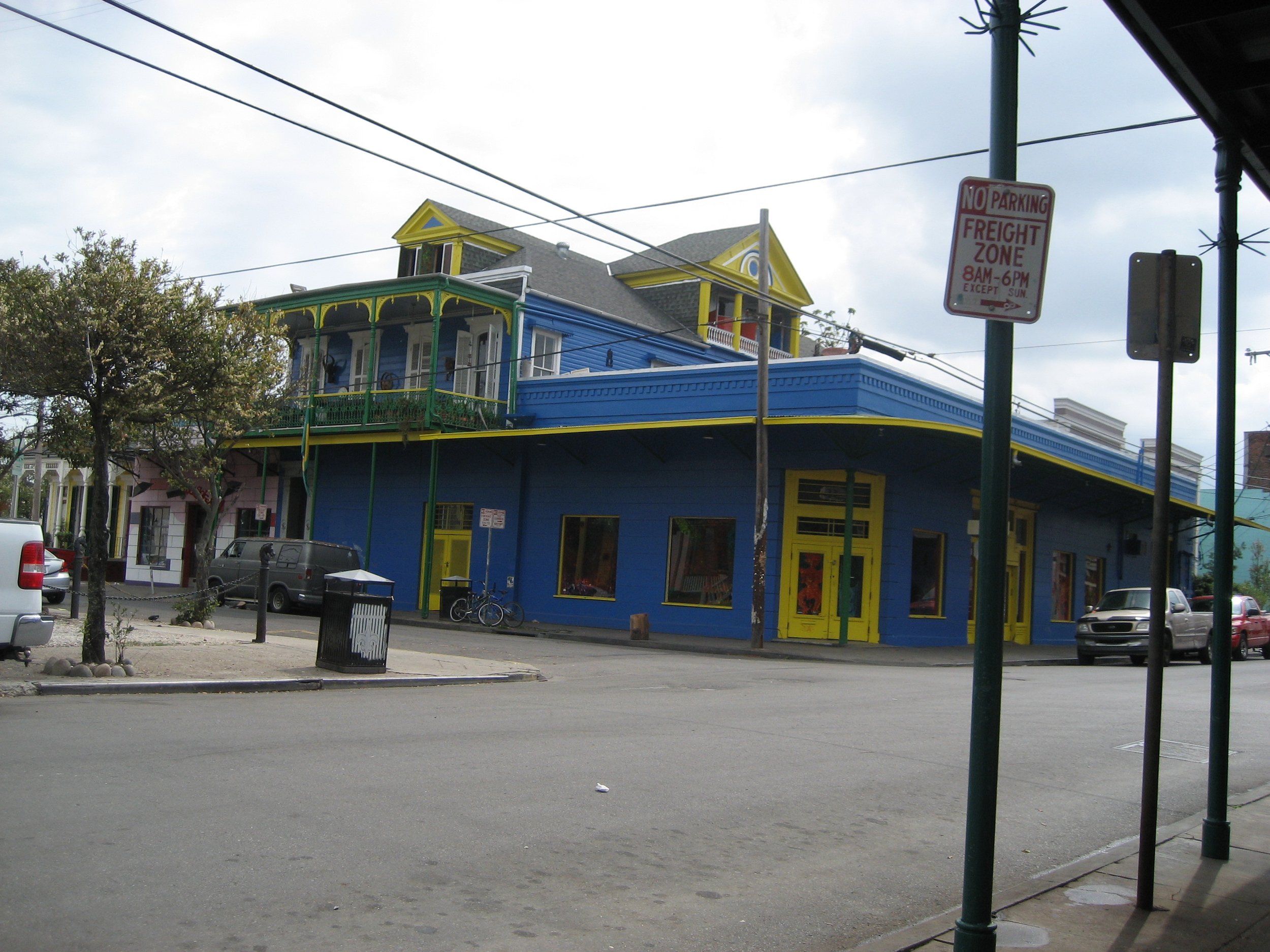
Driving into New Orleans for the first time after Hurricane Katrina was bizarre—so many homes and buildings had still not been repaired, and were still boarded up. Plywood covered windows, and spray paint told rescue teams the number of people that had been found in the house, the number of animals that had been found, and whether the house was abandoned or not. My friend Becka had moved to New Orleans not long after Hurricane Katrina. After the storm, she had told me stories about how lawless the city had been and how FEMA had not been able to take care of the hundreds of thousands of people who had been displaced by the hurricane. She talked about people moving back in and the turf wars that happened as people fought to reestablish themselves. It was strange to see it, and Ward and my lively bus ride turned solemn as we looked around. I couldn’t tell if anything had been repaired. It was impossible to know from how the city looked if the hurricane had happened months before or years before.
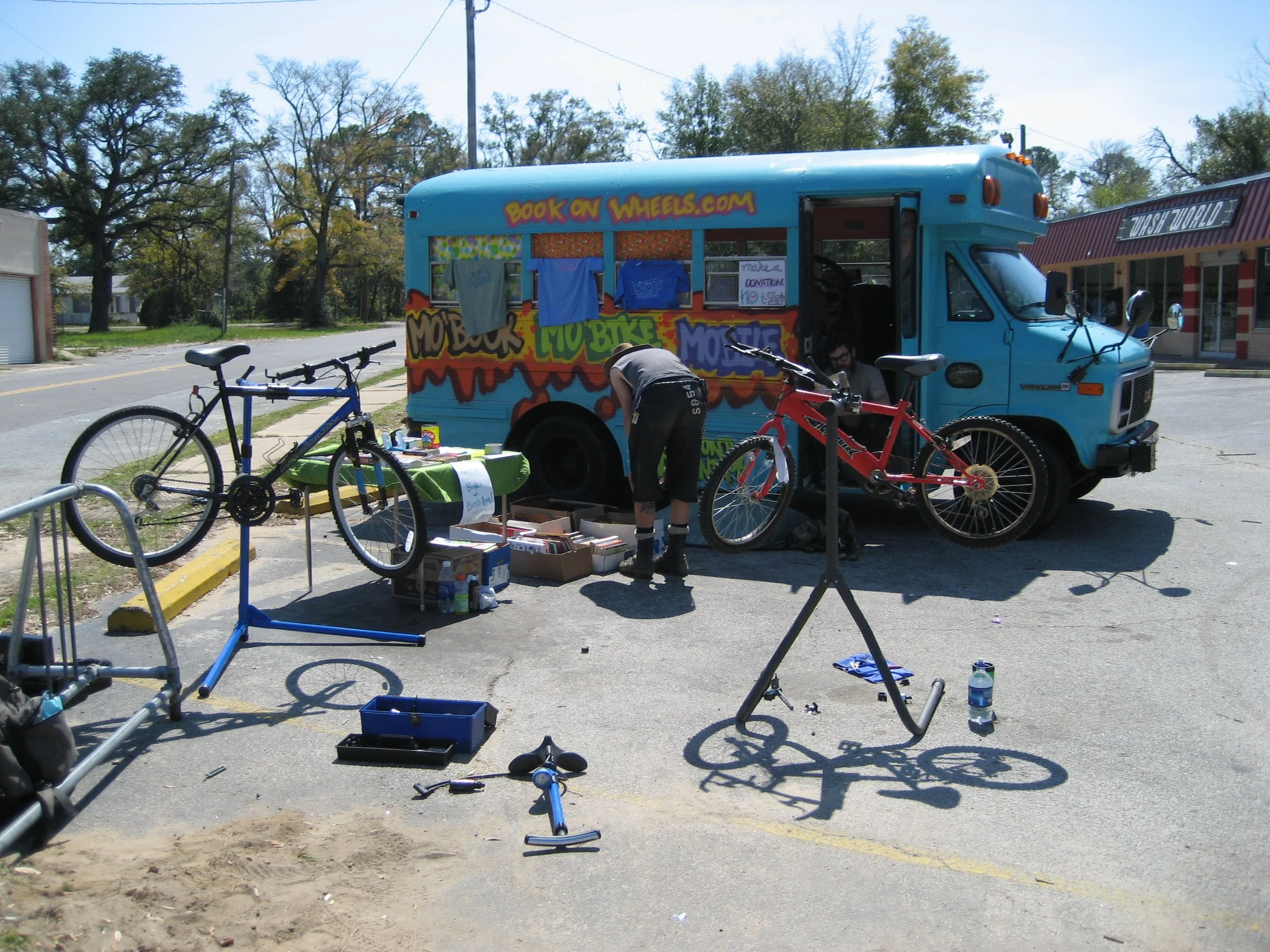
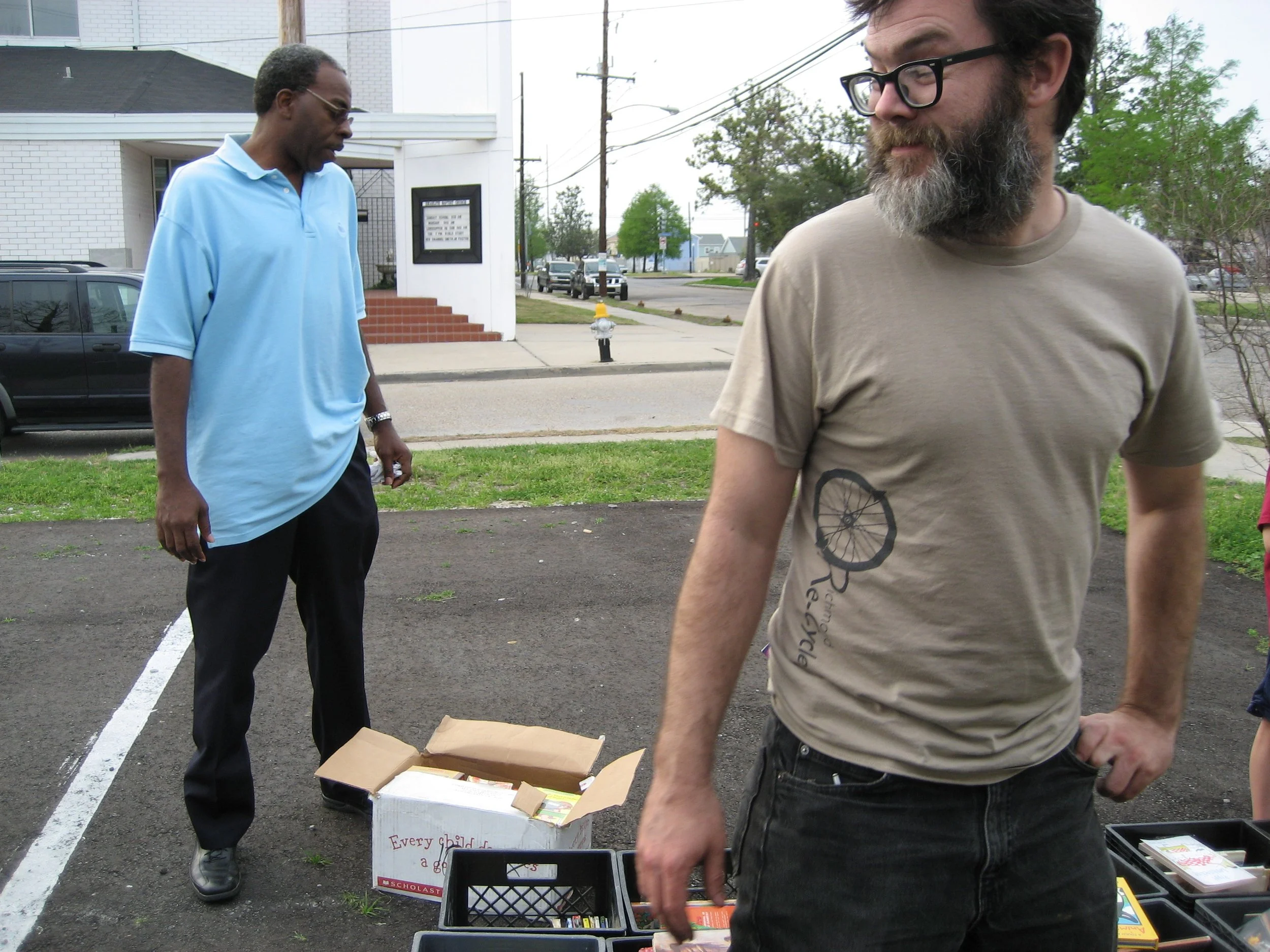
When we pulled into the parking lot of the church, Reverend Larry was waiting for us. The lot was otherwise empty, one side leading into the church, and the other three faces open streets and a large field, with very few trees blocking our view of the city skyline. Reverend Larry was a tall, Black man in his mid-40s with a deep voice. He greeted us warmly as we walked off the bus. His height and his tinted eyeglasses made it hard to see where exactly he was looking in the bright Louisiana sun, but as he spoke with Ward and me, he kept a hand on one of our shoulders, a kind gesture to signify that we had his full attention. He thanked us profusely for being at his church, even though we had yet to do anything other than show up. He talked about his congregation and the neighborhood that had been greatly affected by the hurricane. Even before Katrina, many people in the area hadn’t had much and weren’t receiving the support they desperately needed outside of what his church tried to provide, in meals, clothes, or spiritual guidance. Reverend Larry told us that we would see the kids in the neighborhood walking home from school soon and that they would be excited to see us. While he returned to his duties inside the church, Ward and I got busy setting up our bike stands and bringing our toolbox out from the bus. We pulled a folding table out of the van and spread a floral tablecloth over it, arranging the books on top of it as neatly as we could, trying to make the older books look attractive and easy to browse. Not long after, we saw kids walking down the sidewalk just as Reverend Larry had said, their small frames dwarfed by too-big book bags which hung comically low down to the backs of their spindly legs. We called out to the children to come over to us and get free books, or better yet, go home, get their bikes, and come back so we could fix them for free while they picked out books. Did we mention it was all free?
At first, I don’t think the kids believed what we were saying to them. They looked at each other for a moment, wondering who in the world these strangers were in their neighborhood. Then, suddenly, their initial hesitation abated, and they all started sprinting towards their houses, book bags bouncing high off their backs. A few minutes later, the kids came back with bikes with flat tires and broken chains and missing seats. Once we had bikes in the stands and kids out front of the bus looking at books, Ward and I didn’t have to work for the attention of any of the other children who were walking home from school. They would see their peers milling around and would come over to see what was going on. Their friends would tell them what was happening, and all over again, the new kids would run home to get their bikes. Before we knew it, Ward and I had a line of bikes, and a dozen kids had already picked out handfuls of books to take home. Soon after the first round of kids headed home, they started coming back with their mothers, who perused the adult books for themselves or took children’s books for their other kids, or nieces or nephews or grandchildren. One mother brought over two plates of food for us—baked beans and collard greens, and cornbread and chicken. We were overwhelmed by her gesture of kindness. We couldn’t thank her enough for doing something for us because she felt strongly about what we were doing for her and her family, and her community.
We worked almost non-stop for three hours. After the last of the kids and their mothers went home for dinner, we tallied up the afternoon’s work. Not only had we managed to fix every bike that had been brought to us, but we had also given away hundreds of books to dozens of kids – many of whom couldn’t comprehend that they didn’t have to return them. That sense of ownership was overwhelming for some of them, who might not have ever owned anything that they didn’t have to return, and Ward and I were so grateful to be able to offer that. We packed up the bus, still amazed knowing what we were trying to do had worked. We had thought it was a good idea, but we hadn’t seen it in action, and it made us feel on top of the world.
Before we left, Reverend Larry came back to the parking lot and thanked us for being there. We insisted that it was our pleasure, and we had had a wonderful day getting to know the people in his community. He also told us that if we ever wanted to return to New Orleans, to make sure we got in touch with him, because we were always welcome at his church. I’ll never forget his final words as we departed: “Make sure you come back. Please don’t forget about us.”
We headed home from that first week on the road feeling energized. Ward and I knew we had a good idea when we decided to start Books on Wheels, but we didn’t know how much people would love it. Our success in New Orleans motivated us to keep up the momentum. By the time we returned to Richmond, the weather was warmer, and we started scheduling events for almost every weekend in town. We packed our schedules full—we contacted public libraries, elementary and middle schools, day care centers, community centers, and churches. We thought at first we would host an event once a month. Soon, there were times I was hosting 10 or 13 in that period. When I got out of school for the summer, we scheduled a week where we went to every public library in Richmond—eight libraries for eight days in a row.
By July, only four months after our first tour, we were ready to get back on the road, this time traveling north. Our first stop was Baltimore, where we partnered with a local literacy organization. They had done an excellent job of promoting—we had a line of kids and adults consistently throughout the day waiting for their bikes to get repaired, and tons of people stopping by both to take books for free and to donate additional books. The donations were more than welcome. We didn’t have another way to restock on the road—we planned on traveling 800 miles to seven cities in four weeks, and everything we needed had to fit in our small bus.
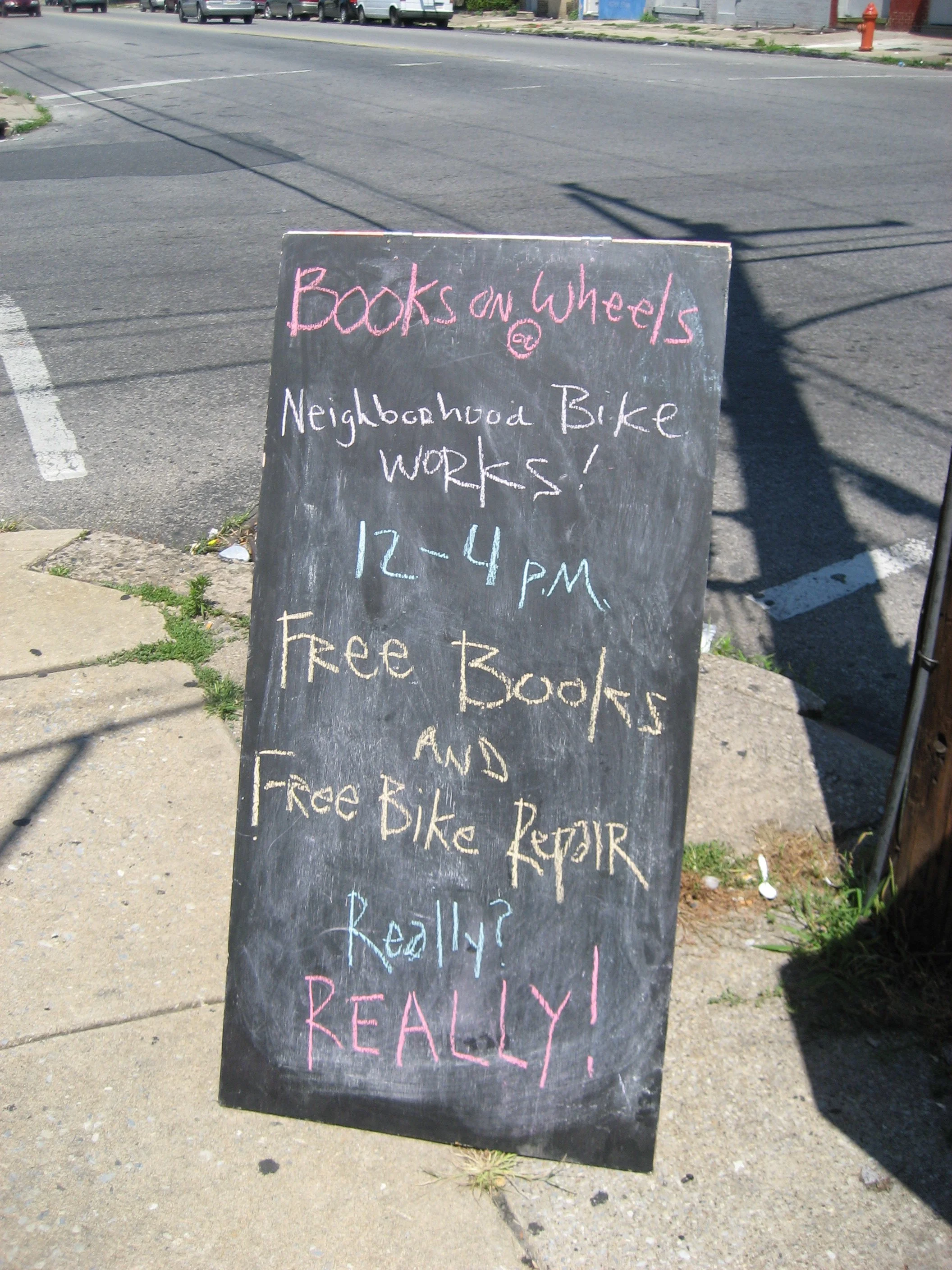
After we left Baltimore, we went to Philadelphia, Pittsburgh, New York City, Rochester, Ann Arbor, and Chicago. In Philadelphia, we had two events set up thanks to an amazing organization called Neighborhood Bike Works that also worked on bikes for free for the public out of two separate workspaces in the city. We spent a day outside of one of their shops, and then an afternoon outside of one of the shops of one of their mechanics, a guy named Ben, who lived in a neighborhood that was full of kids who were all out of school for the summer. The kids were thrilled about getting their bikes fixed so they could show off doing wheelies in the streets and skidding to a stop on new, freshly pumped-up tires.
We were so busy every place it made our heads spin. In New York, we would get a line of thirty children at a time, some alone and some with their parents, a lot of them having pushed two bikes from home to get repaired. They waited patiently in the summer heat, and we did everything we could to make sure everyone had their bike repaired. We would work for five hours straight on the sidewalk outside of the bus without a tent to protect us from the sun—I would barely have the time to look up to talk to the kids whose bike I was fixing. I would just stick my arm out, grab the next small bike by the handlebars, flip it over so the seat was on the ground to look and see what was keeping it from moving. Mostly it was just flat tires where a tube needed a patch, but we also saw the craziest rigged bikes. I saw one bike with a rear wheel jammed into the dropouts of the—I puzzled over how it stayed like that and still moved. Kids brought bikes without seats, without chains, without pedals that they still managed to ride somehow. Trash from the city’s streets was a major issue—many times, fixing a bike required nothing more than scissors to cut out old hair of twine from around the hub of the back wheel, the garbage having been wrapped so tightly around the cog that the wheel stopped rolling altogether.
Ward and I started to develop tricks for working on bikes with limited supplies. Electrical tape was a great substitute for a rim strip or missing grips. A folded-up piece of soft cardboard fixed a hole in a tire once the tube was inflated to keep it pressed firmly in place. I had never worked so hard in my life as I did repairing bikes with Books on Wheels, and I loved every minute of it. Every day that we finished and packed up the bus, I was exhausted, overheated, and so proud of what we had been able to do and how we had used our skills to make people happy, to get people back on bikes, to share literature and promote reading. I loved seeing kids ride away on bikes that had been broken all summer, knowing they could go outside and play with their friends instead of staying indoors and watching TV. I would look at my greasy fingernails, my palms calloused from using a pedal wrench 50 times in a day, the bruises on my form arms and thighs from hitting myself with tools, and feel a powerful sense of satisfaction in the work we were doing.
Before or after our events, if we didn’t have to travel out of a city the same day, Ward and I would get to ride our own bikes and visit with friends. There was, and is, never a dull moment with Ward. We’d have a dance party alone in the bus, hold intense debates over whether we should eat oyster po’boys that had been left in the bus for two days. Ward has a way of being both mischievous and likeable. He is the kind of person who can make a joke to a stranger at a bar and almost cause a fight and then manage to not only talk his way out of it, but somehow get that same stranger to buy him a drink by the end of it. It was always funny to watch. Once, I was in the car with Ward when he drove over a median to cut in line at a fast-food drive-thru, thoroughly confusing the person at the window by having no order to pick up. I’d laughed so hard in the passenger seat my stomach ached. Another time, finding little entertainment otherwise at a bar, Ward convinced a couple, a man and a woman who both had long straight hair that reached far down their backs, that he was a hairstylist and that his dream was to braid their hair together. They let him do so with little hesitation, as they continued to sip their beers. I looked on, knowing full well that Ward did not know how to braid hair. He stood behind the couple and tangled their hair up and tied it in a messy knot, thanked them, and walked away, smiling at me from across the room. He would sometimes get me in on his pranks. We spent time doing stupid tricks that we would never see the reactions to. We went to a party together one time and found ourselves bored, not knowing anyone, so we took frozen broccoli out of the freezer and placed the pieces on top of the ceiling fan, covering all five fan blades, and then left, not knowing when the next time someone would turn the fan on, only to have rotten broccoli fly all over their kitchen.
One of my funniest memories of being on tour with Ward happened when we were in Philadelphia that summer. We had finished up our Books on Wheels event for the day and were riding our bikes around town when we stopped in a little convenience store selling novelty ashtrays and slippers and other random items. Ward and I found these small squirt bottles, the kind that you would water houseplants with or point at a dog to let it know it was doing something that it shouldn’t. We bought two bottles, filled them up with water, and then hopped back on our bikes. As we rode through the city, we took turns getting in front of or behind each other in each other’s path; that was so refreshing, finally feeling a little bit of relief from the summer heat, enjoying our time off, with nothing to do and nowhere to go. Afterward, we stopped at a grocery store to get smoothies and cool off in the air conditioning. At one point, while we walked around the refrigerated aisles, Ward came up behind me and made a fake sneezing sound, spraying the back of my neck with the squirt bottle. I knew it wasn’t a real sneeze, but it had the same disgusting feeling of being sneezed on that made me cringe, albeit still laughing at his joke.
My laughter always seemed to egg Ward on, so next he tried his trick on someone he didn’t know. When we got in line at the checkout, a man who was about the same height as Ward was in front of him. Ward did his bit—fake sneeze, at the same time holding the water bottle up near his face, while he pointed it directly at the back of the guy’s neck. Before he even turned around, the man put his hand on his neck in disbelief and then looked directly at Ward behind him, who was kindly smiling as though nothing was weird. I was standing in the line next to Ward, pretending to check out with a different cashier so I could see the joke play out, looking out of the side of my eye so it didn’t seem as though I was watching. Ward apologized to the man, to which the guy replied, “You’re lucky I don’t hit you.” Even in the grocery store, Ward could manage to get people worked up. It never stopped entertaining me.
We returned to Richmond after a month on the road, just in time for me to start my last year of graduate school. We continued hosting Books on Wheels events on the weekends during the day, and I bartended at night to pay my bills. I would even fit some events in at day care centers and other facilities during the workweek when I wasn’t in class or at my internship. One afternoon in the early fall while riding my bike to meet Ward for lunch, I saw a blue bus almost exactly like ours parked on an overpass. I took a detour to ride up the hill to check it out. The bus was a little larger than ours, but the words written on the side were familiar—it was the name of Buzz’s rafting company painted in sun-faded letters, and there was a for sale sign in the window.
When I got the restaurant to meet Ward, I told him about the bus, and we decided to call Buzz. I hadn’t really thought about expanding Books on Wheels, but a bigger bus would allow us to carry more books and bike parts, and we might also have room to take volunteers with us to help us work on bikes.
Never one to hesitate, Ward called Buzz while we were eating our burritos. Buzz was happy to hear from Ward, only eight months after we had purchased our small bus from him. He told us that the 1984 International Diesel had 130,000 miles on it and it ran great. Again, he was only getting rid of it so he could downsize his company. We made a plan to meet with Buzz the next day.
When we arrived at Buzz’s warehouse, I was mesmerized by how beautiful the bus seemed, even though I had seen it in person already—it looked enormous compared to our little bus. The driver’s seat alone was big enough for two people to sit next to each other, and using the steering wheel felt like driving a ship. The gear shifter on the ground was easily two feet tall, and there was a whole panel of buttons next to the driver’s seat and more lights and flashing signs than we had in our small bus. The rubber walkway that led to the back of the bus was so long you could get up to full speed running before you hit the back door. Again, Buzz watched Ward, and I played around like kids before telling him we wanted to buy. Buzz drove the bus to my sister’s warehouse, and I gave him a ride home in the small bus once again.
Just like we did the first time, as soon as we bought the big bus, we started to gut it. We removed 12 double rows of seats, which piled 8 feet above us on the ground after we were done grinding away at the feet and knocking them out with a hammer. We left only the driver’s seat, and we took the couch out of my living room to put in place of the rigid benches. We built four lofts, and stocked the bus with boxes of books, bicycle parts, spare tubes and tires, and still had plenty of room left over for dozens of complete, working bikes if we needed. We hired the same artists who had painted our first bus, and he covered both sides with amazing letters that made the bus stand out like nothing I had ever seen – it would be impossible not to notice a vehicle of this size, with its bright blue, green, and yellow letters spelling out Books on Wheels on one side, and MoBookMobikeMobile on the other.
We didn’t get a chance to go on our next tour until the following spring when I had another school break. Over the winter, even when it was really cold in Richmond, Ward and I stayed busy with events, alternating between taking the big bus or the small bus depending on the workload. Ward and I both got comfortable driving the big bus. We helped each other learn the blind spots and how to take turns wide enough—we didn’t have to get a special license to operate such a big vehicle since we weren’t actually transporting passengers, so we practiced driving the roads around my sister’s warehouse where there was little traffic. We continued to hold book drives and made appearances and hosted fundraisers at local bars to raise money so we could afford the expensive diesel gas the bus required.
When spring break rolled around, our tour was fully booked. We would head south again to revisit Pensacola and go back to New Orleans to work with Reverend Larry, as well as add some new events while we were there, working with a local bike co-op as a partner, and ending our trip in Austin. In nine days, we would drive from Richmond to Texas and back, a total of more than 3000 miles, in a bus whose top speed, even after having the governor removed, was 55 miles an hour.
Since we had so much room in our big bus, we brought along Erin and our friend Joel, both incredible bike mechanics, to help us. After stopping for an event in Pensacola, we made our way to New Orleans, arriving just two days after we left Richmond. Our first plan was to visit an elementary school to deliver some books—a recommendation that had been made by Reverend Larry. As Erin, Joel, and I waited for Ward to go inside and get approval from the school administration to enter the building, a man approached the bus. He stopped at the open door and asked Joel, who was sitting in the driver’s seat, what we were doing. After Joel explained the project, the man introduced himself as Tony and said he had a bike that he loved that he really wanted to show us. He scurried away, and Erin, Joel, and I continued chatting sitting in the bus, myself perched on an upside-down five-gallon bucket that we used as the bus driver’s companion seat, and Erin sitting on the couch only a foot or two away from Joel and me.
When Tony returned just a few minutes later, we had anticipated that he was going to have a bike with him—but instead, he was holding a small photo album. He proudly handed it to Joel first. Just as Joel opened the book, Ward returned, and he and Tony started talking about life in New Orleans and what it had been like being in the city before and after the Hurricane. There were few times when meeting new people in New Orleans after the hurricane when your second or third questions weren’t about the stark differences in the city and in the lives of people before and after Katrina—it was the difference in worlds, and it affected every person who lived there. As Tony and Ward chatted, I looked over to Joel, curious as to what the photos of Tony’s bike looked like. I was seated on an upside-down five-gallon bucket we used as a driver’s seat companion, too low to get a good look at the album, but close enough to Joel to see he had a confused look on his face. I got up to look over his shoulder at what he was puzzling over and saw that Joel was looking at a photo of not a bike, but of Tony pushing a shopping cart.
Just at that moment, Tony turned his attention away from Ward and back to Joel, looking at him with excitement, as he waited for a comment about the photo of his “bike.” Joel, still looking down at the picture, muttered, “Cool, man, yeah, this is great,” with obvious hesitation, not wanting to make Tony feel bad – Joel was embarrassed that Tony didn’t know what a real bike was and was trying hard to be polite. Tony must have sensed that Joel was acting funny. He stepped up into the bus, looked down at the picture Joel was staring at, and yelled, “ No man! That ain't no bike. That’s a shopping cart! Turn the page.”
Tony, to our relief, was the self-proclaimed Candy Apple King of New Orleans. When Joel turned to the next photo, it was a picture of Tony proudly riding through the streets of the city on a three-wheeled bicycle, his candy apple art in front of him in an ice-cream cooler-type box, supported by two wheels in the front and one in the back, a folded-down umbrella attached to the side of the box. Tony explained to us that he got out of New Orleans before the hurricane, but came back a few days later, when the city was still submerged in dangerously contaminated water, to rescue his bike. It was badly damaged, but he was able to restore it a few months later so he could get back to work selling candied apples all over town. After telling his story, Tony took his photo album back from Joel, and we said our goodbyes so quickly Joel didn’t even get a chance to explain that he didn’t actually think that Tony’s shopping cart was a bicycle; he was just trying to be polite. To this day, I am sure the Apple King of New Orleans still thinks that Joel, a professional mechanic, doesn’t know the difference between a bike and a shopping cart.
We had another great trip to New Orleans on our second spring tour, thanks in large part to the help of Erin and Joel. We worked at the church with Reverend Larry again, keeping our promise that we would come back, and we held an event in the Lower Ninth Ward, where Hurricane Katrina had caused the worst damage. We set up in a large parking lot of an abandoned elementary school, surrounded by low-income housing. Kids came out to have their bikes fixed, and then we took turns racing them through the parking lot on the bikes; Erin, Joel, Ward, and I always lost to the kids, being much too big to ride on small children’s bikes. While we were there, a former teacher at the school came to greet us and told us that the library was on the second floor and had not been badly damaged during the hurricane. She offered to let us in to see if there were any books that we wanted to take with us. We walked through the eerily quiet hallways of the school, one of many that would close and never reopen due to expensive damage from flooding. The hair on my arms stood up as we walked into the library. It had been untouched for years—a place where children once had access to books and learning every day, now abandoned. The shelves were still full, the small tables and chairs for reading in place. It was so quiet as a library should be, but full of joy and wonder. We packed up as many books as we could fit in the bus, said goodbye, and headed out of town toward our next destination. If we didn’t stop driving, we would reach Texas by nightfall.
***
I wrote this 10 years ago without a plan of what the story was other than to get to write down the story of how Books on Wheels started and why it was such an important time in my life. I loved Books on Wheels and what we were doing. I loved how happy it made people. I loved being on the road and meeting new people every day and hearing their stories. I have never forgotten Reverend Larry, or the Apple King, or New Orleans.